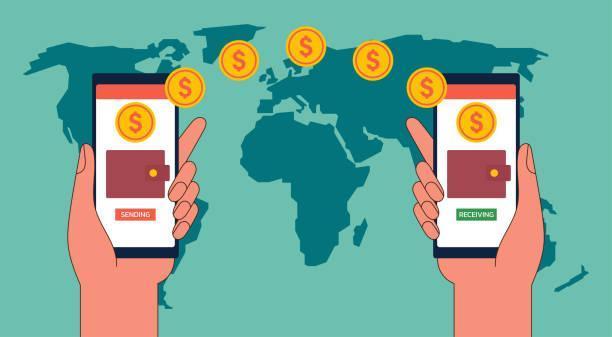
Cross-border digital payments are becoming one of fintech’s most revealing stress tests. Consumers increasingly expect transfers to feel instant and local even when money moves between currencies, banking systems and jurisdictions. Online gaming is a particularly demanding example because payment speed, identity checks, fraud prevention and platform rules all intersect at the same moment.
Payment Friction Is Becoming More Visible
The wider digital economy has trained consumers to expect simplicity.
Streaming subscriptions renew automatically. E-commerce platforms store preferred payment methods. Travel apps can process transactions across multiple countries without making the underlying financial complexity obvious.
Online casinos are under similar pressure. A player may expect to deposit in seconds, access funds quickly and understand any fees before confirming a transaction. The challenge is that casino payments often involve more controls than an ordinary retail purchase.
Cross-border activity adds another layer.
A transaction may involve:
- a player in one European country
- an operator licensed in another jurisdiction
- a payment provider based elsewhere
- a bank applying its own transaction rules
- currency conversion before settlement
From the user’s perspective, all of this is expected to happen smoothly.
That expectation is one reason searches for options such as an mga casino without swedish license also have a fintech dimension. Players exploring internationally licensed platforms are entering payment environments that may not follow the same banking patterns as locally licensed services.
International Casino Payments Test Infrastructure
The interesting part for fintech companies is not simply transaction volume. It is the number of systems that must work together.
Modern casino platforms often rely on payment service providers rather than building every payment function internally. These providers may connect card networks, bank transfers, digital wallets and alternative payment methods to a single operator interface.
The user sees a payment menu.
Behind that menu, however, software has to determine whether a method is available, whether the transaction can be processed and how the funds should be routed.
This makes the casino sector a useful test case for payment orchestration.
In e-commerce, a failed payment can result in an abandoned shopping basket. In online gaming, payment failure can also affect account activity, verification checks and withdrawal expectations. Reliability therefore becomes central to the entire user experience.
Fintech providers that can reduce unnecessary failure points without weakening security have a clear commercial advantage.
Local Banking Habits Still Matter
Europe may have an increasingly connected digital economy but payment behaviour remains highly local.
Consumers in different countries prefer different combinations of bank transfers, cards and wallet-based services. Familiarity matters because people are more likely to trust a method they already use for everyday purchases or online banking.
For international casino operators this creates a localisation problem.
Offering too few payment options may make a platform feel foreign. Offering too many can make the interface cluttered and increase operational complexity.
The stronger approach is often selective localisation.
That means understanding which payment methods users actually prefer and integrating them into an account system that behaves consistently. A player should not have to learn an entirely different process simply because the underlying payment rail changes.
Cross-border casinos also need to manage currency presentation carefully. Even when a transaction can technically be completed, unclear conversion rates or unexpected charges can damage trust quickly.
Fintech design therefore has to solve both infrastructure and communication.
Payments Are Becoming Part of Platform Strategy
Payment systems were once treated as a utility. They are now becoming a competitive part of digital product design.
That shift is visible well beyond gaming. Marketplaces use embedded payments to keep users inside their ecosystems. Software platforms increasingly integrate billing directly into their products. Banks are opening more services through APIs.
Online casinos are moving in the same direction.
Payment technology increasingly connects with account verification, fraud detection and responsible account controls. Instead of operating as an isolated checkout function, payments are becoming part of a broader identity and risk system.
This creates opportunities for fintech companies specialising in orchestration and account-to-account transfers. It also increases the importance of technical integration.
A fast payment method is useful only if the operator can reconcile transactions accurately. A broad payment menu has little value if withdrawals are inconsistent. The quality of the overall system matters more than the presence of any single option.
Cross-Border Complexity Is Not Going Away
International digital businesses will continue to face different consumer habits, financial rules and banking infrastructures across Europe.
The goal is not to eliminate that complexity. It is to prevent users from experiencing all of it directly.
Online casinos provide an unusually clear example of the challenge because payments sit at the centre of the customer journey. Deposits, withdrawals, verification and account activity are closely connected.
For fintech companies, that makes the sector worth watching. The providers that can make cross-border transactions feel simple while supporting reliable identity and risk processes may develop technologies that are useful far beyond gaming.
Casino payments are not an isolated niche. They are part of a wider experiment in how digital platforms can move money smoothly across increasingly connected markets.