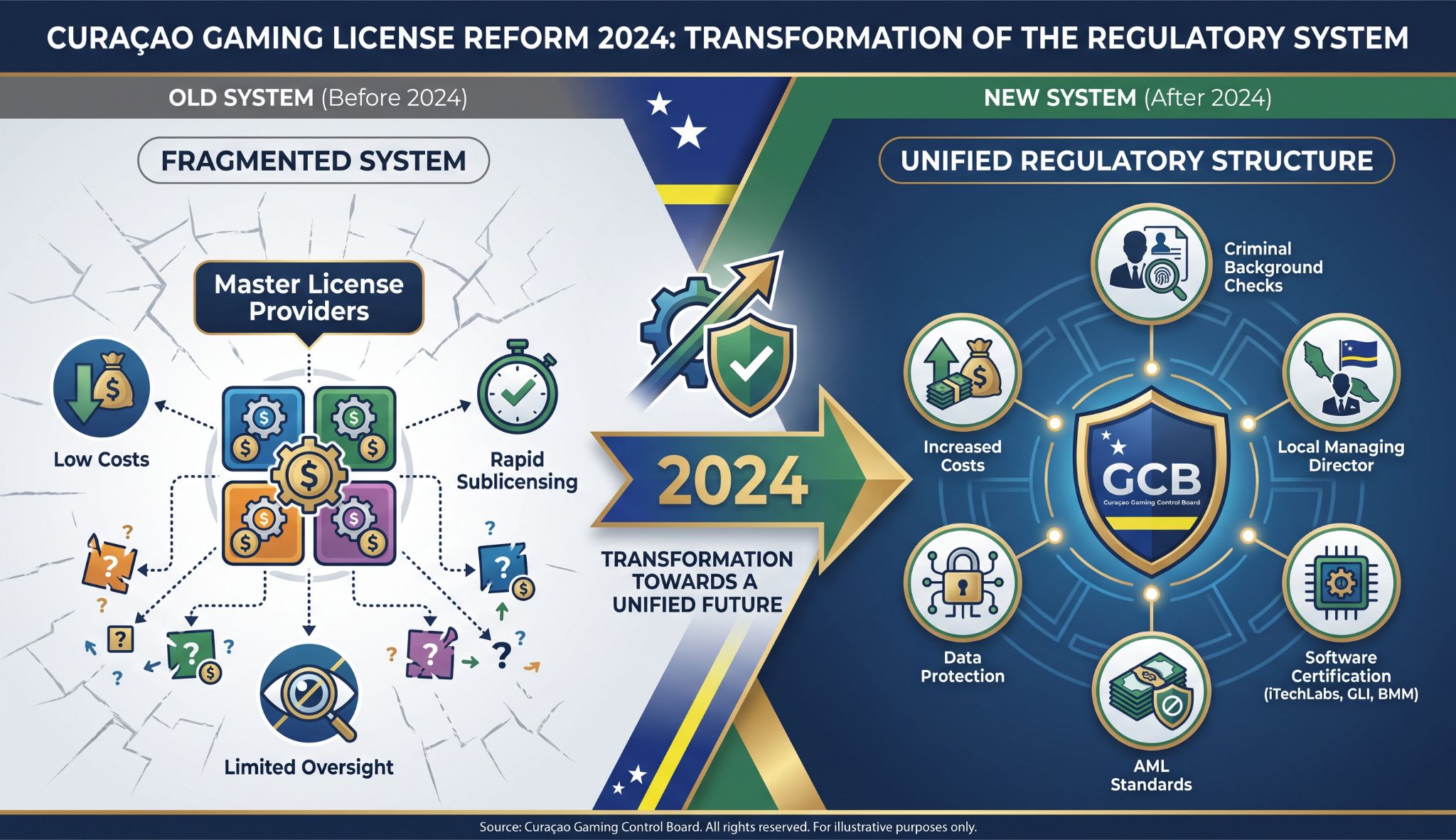
For more than two decades, Curaçao operated as one of the most accessible jurisdictions for online gambling operators, thanks to a system built around a handful of master license holders who sublicensed to hundreds of operators worldwide. That era formally closed in 2024, when all previously issued sublicenses expired and the island moved to a centralized regulatory structure overseen by a single authority. Operators who once relied on master providers now answer directly to a government body, and the shift has forced many well-known platforms to reconsider how they operate in the region entirely.
The transition affects a wide swath of the industry, from small startups to major international brands. Sites such as Stake.com and Rollbit, among others, have had to decide whether to migrate to the new licensing framework or pursue alternative jurisdictions like Anjouan or Kahnawake. A detailed breakdown of this shift, including the application timeline and documentation requirements, is covered in an overview of the curacao gaming license process, which outlines how the new structure departs from the old master-provider model.
A Single Regulator Replaces a Fragmented System
Since 2024, the Curaçao Gaming Control Board (GCB) has served as the sole regulatory authority overseeing online gaming on the island, replacing the patchwork of master providers that previously issued sublicenses with limited direct government oversight. The GCB’s mandate includes enforcing anti-money laundering standards, data protection rules, and player safety measures that align more closely with international norms seen in other established jurisdictions. This centralization is meant to close longstanding criticism that Curaçao licensing lacked consistent enforcement, since master providers historically operated with considerable autonomy in vetting and monitoring their sublicensees.
The new framework issues a single type of operating license that covers multiple verticals, including online casinos, sports betting, lottery products, and virtual table games, rather than separate categories for each vertical. Notably, under the current legislation, there is no formal distinction between B2B and B2C licensing, though this is expected to change once new legislation takes full effect, at which point B2B licenses may become mandatory specifically for business-to-business companies establishing a physical presence in Curaçao.
What the Application Process Actually Requires
Compared to the old system, the requirements for obtaining a GCB license are considerably more stringent. Applicants must demonstrate a clean criminal record for all beneficiaries and directors, along with documentation covering proof of address, proof of funds, and source of wealth. Bank references and professional letters of good standing are also part of the standard application package. A distinctive requirement of the new regime is the mandatory appointment of a local managing director based in Curaçao, a departure from the largely offshore administrative structures that characterized the previous licensing model.
Software providers face their own set of obligations, including certification from recognized testing labs such as iTechLabs, GLI, or BMM Testlabs, standards that have long been common in more established regulatory environments but were not strictly enforced under Curaçao’s old master license system. Taken together, these changes signal an effort to bring the jurisdiction’s compliance expectations closer to those maintained by regulators elsewhere.
The Cost of Compliance Has Risen Sharply
One of the more consequential changes for operators is cost. Under the previous system, obtaining and maintaining a Curaçao sublicense was relatively inexpensive, which was part of the jurisdiction’s appeal for smaller operators entering the iGaming market. Estimates for the new regime suggest that annual costs, including local directorship fees, physical office expenses, and ongoing compliance obligations, could reach into six figures in euros. This shift effectively repositions Curaçao from a budget-friendly entry point into a jurisdiction with substance requirements more comparable to mid-tier regulators, even if it remains less costly than licenses issued by authorities such as Malta or the United Kingdom.
For operators weighing their options, the calculation now involves more than just licensing fees. It requires assessing whether the added compliance burden and local presence requirements make sense given target markets, expected transaction volumes, and long-term business plans. Some operators may find that alternative jurisdictions better suit smaller-scale operations, while others may determine that the credibility gained from a reformed Curaçao license justifies the increased investment.
The broader trend reflects a pattern seen across the gambling industry generally, where jurisdictions once known for light-touch oversight face pressure to modernize as payment processors, banks, and international regulators scrutinize licensing quality more closely. Readers interested in how offshore gambling regulation has evolved globally can find useful background in the overview of gambling regulation maintained on Wikipedia, which situates Curaçao’s reforms within the wider context of how jurisdictions balance accessibility against regulatory credibility.