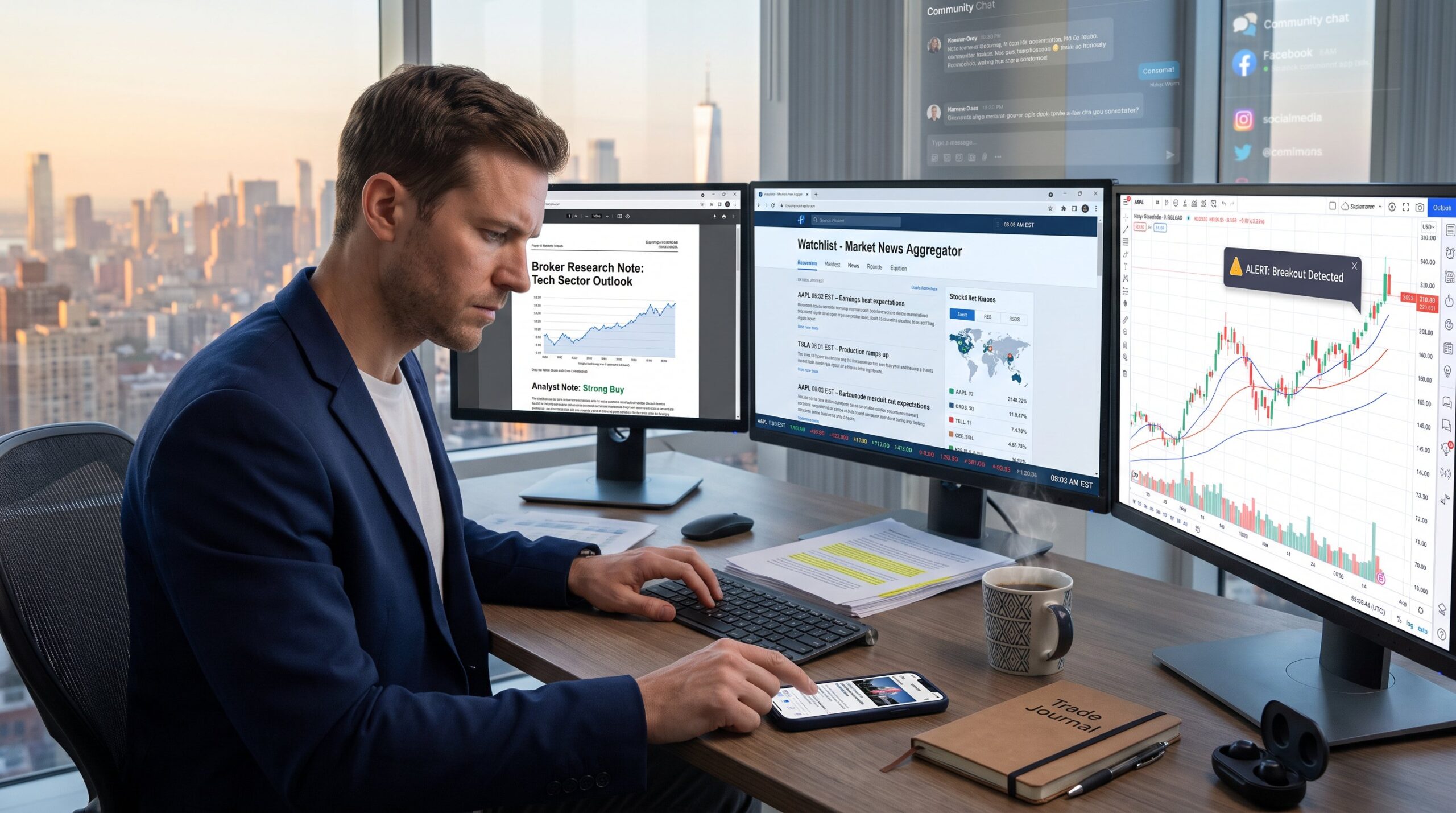
Where to Browse Trading and Stock Market Articles matters: traders and investors need fast, accurate analysis and actionable ideas. This guide maps reliable places to read market news, research, and trade ideas in 2026. It focuses on sources that reduce noise, improve decision speed, and link directly to tools traders use every day. The sections that follow explain why source quality matters, list top general news sites, cover aggregators and alerts, highlight specialist research and community sources, describe broker and institutional outputs, and show how to evaluate and organize feeds for daily trading.
Key Takeaways
- High-quality trading and stock market articles reduce costly mistakes by providing verified prices, timestamps, and direct links to primary sources, enhancing decision speed for traders and investors.
- Top general news sites like Bloomberg, Reuters, and Financial Times offer fast, reliable real-time market coverage essential for tracking macro catalysts and company-specific news.
- Aggregators and alert systems help traders save time by filtering news by ticker and sentiment, but filters should be carefully set to minimize noise and false positives.
- Specialist research platforms provide verified data and technical analysis, while community sources offer early trade ideas that must be rigorously verified before use.
- Broker and institutional reports deliver professional-grade models and macro scenarios but require cross-validation and awareness of potential conflicts of interest.
- Organizing sources into a structured workflow with watchlists, separate news channels, and trade journals improves trading discipline and reduces errors by ensuring verification and outcome tracking.
Why Source Quality Matters For Traders And Investors
Fact first: sourcing high-quality market coverage reduces costly mistakes and speeds decision-making. Reliable outlets deliver verified prices, timestamps, and clearly labeled opinion so traders avoid acting on rumors or stale data.
Quality matters because seconds and accuracy matter. For example, a day trader reacting to an unverified merger rumor can lose a large position in minutes: an investor relying on a poorly sourced earnings recap might misread guidance and buy at the peak. Reputable publishers, those with editorial oversight and audit trails, tend to correct errors quickly and provide context linking to filings or primary statements.
Practical warning: community posts often add color but not verification. A forum user may claim “insider-like” knowledge: unless the claim links to a regulatory filing, treat it as speculation. Traders should prefer sources that separate news from commentary and show original documents (e.g., SEC filings) or direct quotes.
Concrete signals of quality:
- Time-stamped headlines with ticker mapping.
- Links to primary sources (earnings releases, filings).
- Clear author bylines and track records.
- Fast corrections and editorial notes.
A small real example: after one regional bank failure in 2023, outlets that published the FDIC release and included the actual balance sheet figures allowed readers to model exposure immediately. That difference saved some traders hours of digging and prevented knee-jerk mistakes.
Next: where to find this level of coverage in real time.
Top General News Sites For Real-Time Market Coverage
Fact first: mainstream financial news sites provide the fastest, broadly trusted real-time coverage. Bloomberg, Reuters, CNBC, Financial Times, Wall Street Journal, MarketWatch, and Yahoo Finance remain core feeds for price-moving headlines.
Why these sites matter: they combine reporter networks, live desks, and market terminals to publish breaking news, analyst calls, and macro moves with speed. Traders use them for macro catalysts (rate decisions, CPI prints) and company-specific items (mergers, earnings). For example, a Reuters wire item quoting a central bank official will typically include full context and attribution.
How to use them practically:
- Keep a live feed open for large-cap news and macro updates.
- Use MarketWatch and Yahoo Finance for quick company snapshots and pre-market movers.
- Use FT and WSJ for deeper regulatory coverage and investigative reporting that changes long-term views.
Tools and examples: MarketWatch’s investing hub organizes coverage and analysts’ pieces for retail readers, which helps when screening stories about earnings or dividends. For a factual primer on how markets work, a concise definition supports understanding of these headlines and why they move prices (stock market definition).
Links in this section are practical: they back claims about coverage breadth and help readers quickly find hubs and definitions.
Financial News Aggregators And Alerts
Fact first: aggregators and alert systems compress dozens of sources into a single, filterable stream so traders can act faster.
Aggregators pull headlines from wires, outlets, and specialty sites and present them by ticker, sector, or sentiment. Traders use them to reduce context-switching. A real case: one trader trimmed 30 minutes of daily monitoring by routing curated headlines for his watchlist into a mobile alert system.
Practical platforms and features to watch for:
- Keyword and ticker filters that only deliver news for positions.
- Sentiment tagging and headline scoring to highlight likely price-impact stories.
- API access for automated systems and backtesting.
How to build alerts: combine a news aggregator with broker-level price alerts. For example, set a news alert for specific tickers and a threshold price alert in the broker app so the trader receives both the catalyst and the execution signal. For traders who want a step-by-step on alert setups and types, the guide on useful stock alerts explains common configurations and when to use them.
Caveat: aggregation reduces time but increases noise if filters are wide. Start narrow, then expand criteria once false positives decline.
Specialist Research Platforms And Community Sources
Fact first: specialist platforms provide depth: communities provide trade ideas and on-the-ground color. Use both with calibrated skepticism.
Specialist platforms (Investing.com, Trading Central, institutional research hubs) offer calendars, historical news mapping to tickers, and technical study overlays. For instance, Trading Central provides structured technical signals that traders can compare with fundamental reports from brokers. Readers who want to build habits can consult a detailed piece on using a trading journal template to record signals from these platforms and measure accuracy.
Community sources, forums, Discord channels, and social feeds, surface raw ideas quickly. A vulnerability moment: a retail community once rallied around a misunderstood short interest metric, leading many to buy before institutional filings clarified the picture. That mistake became a lesson in cross-checking community claims against filings and broker reports.
How to blend them:
- Use specialist platforms for verified data and charts.
- Use community sources for early idea flow, but verify before trading.
- Archive community claims in a journal template to track which channels reliably produce trade-worthy information.
Recommended practice: subscribe to a specialist platform for data and keep one vetted community channel for idea generation. Avoid treating community posts as confirmed facts.
Broker Research, Institutional Reports, And Independent Analysts
Fact first: broker and institutional reports contain professional-grade models, but access and biases matter.
Brokers distribute equity research with earnings models, target prices, and risk factors. Institutional reports often include proprietary macro scenarios. Independent analysts publish specialized deep dives and often map articles to tickers for backtesting. For traders, the value is twofold: richer modeling and data that’s often unavailable in headline feeds.
Practical checks to apply:
- Confirm analyst conflicts of interest (investment bank trading books, underwriting).
- Compare multiple research notes on the same company to spot consensus and outlier views.
- Use independent providers for historical news databases tied to tickers if backtesting strategy responses to news events.
Internal resources on FintechAsia help here: a dedicated piece on market trends and stock news, FTAsiaTrading stock news, offers regional context and examples that traders can compare with global broker reports.
Outcome: treat broker research as professional input, not gospel. Cross-validate models with filings and alternative data where possible.
How To Evaluate, Organize, And Use Sources For Daily Trading
Fact first: prioritize timeliness, reliability, and coverage breadth, then organize feeds into a workflow.
Evaluation checklist (actionable):
- Timeliness: Does the source publish in real time and include timestamps?
- Reliability: Are primary documents linked? Is the outlet known for corrections?
- Coverage: Does it cover the assets the trader trades (equities, FX, crypto)?
Organization blueprint:
- Build watchlists by symbol in a news aggregator and map those to price alerts. The FintechAsia guide on stock trading terms can help traders label events and terms consistently across feeds.
- Create channels: one for macro (central bank, GDP), one for company news, one for technical alerts. Keep these separate to avoid overtrading.
- Archive and tag: store important articles with tags like “earnings miss,” “guidance raise,” or “regulatory.” Tagging enables quick retrieval during a trade event.
Practical workflow rules:
- Rule 1: Verify any trade-triggering headline against a primary document before executing a large position.
- Rule 2: Use at least two independent sources for material company news.
- Rule 3: Track outcomes in a trading journal: review weekly to refine source selection. For a template to structure that review, see this trading journal resource.
A human lesson: one trader who ignored Rule 1 learned to his cost, he executed on a social post that later proved false. He now always looks for a filing or wire confirmation first.
Finally, a short practical tip: combine curated regional coverage with a broad aggregator. For Asia-focused traders, start with a regional pillar such as the FinTechAsia guide to understand local market structure and regulatory nuances.
Conclusion
Insight: quality sources and an organized workflow turn information into consistent edge. Traders who pick a small set of verified feeds, build targeted alerts, and log outcomes will reduce mistakes and trade with more confidence. The real advantage in 2026 is not access to headlines, it is the discipline to verify, tag, and learn from every market signal.