
Starting a business is exciting. You have a fantastic idea, lots of ambition, and big goals for the future. But before you focus on making sales or attracting customers, it’s important to build a foundation that can support your business for years to come.
Imagine it as the building of a house. Without a good foundation, even the most powerful walls may crack with time. The same applies to a business. With the right planning, legal structure and financial frameworks, you can avoid making typical mistakes while you register a business in BC and plan for long-term success.
Be it a local store, an online business, or a professional service in British Columbia, the steps you take today can make the difference in your future.
Here’s how to build a strong foundation for your business with confidence.
Why a Strong Foundation Is the Key to Business Success
A company can hardly go out of business due to a bad idea, but rather due to the fact that it is initiated without clear organization. The issues tend to emerge later when the business starts to expand and deal with increased pressure.
A strong foundation ensures everything is stable from the very beginning and that growth in future is easier to manage.
With a strong foundation:
- Legal and financial risks are under better control
- Decisions become faster and more consistent
- Expensive restructuring is avoided later
- Growth stays organized instead of chaotic
With a properly organized business, customers, partners, and institutions find it easier to trust the business, which in most cases results in increased opportunities.
This is why many entrepreneurs choose to register a business in BC early in their journey. It provides the business with a legal status and a certain structure, which makes all the further steps more stable.
Success, in the long term, does not solely depend on the idea, but on how strong the foundation is from day one.
Essential Steps to Build a Strong Foundation for Your Business in BC 

1.Turn Your Business Idea into a Clear Plan for Success
Any successful business starts with a simple question:
“Does my idea solve a real problem?”
Before investing money or time, take a step back and evaluate your business idea. The more you understand about your market, the more powerful your decisions will be.
Start by asking yourself:
- What problem am I solving?
- Who are my competitors?
- What makes my business different?
The answers will help shape your business plan and give you a clear direction.
There is no need to worry about developing an ideal plan from the beginning. Rather, concentrate on making achievable targets that you can amend as your business expands.
Quick Tip: A business plan isn’t just for securing funding. It assists you in staying focused and making wiser decisions as your business continues to develop.
2. Choose a Business Structure That Supports Your Long-Term Goals

Choosing a business structure in BC is not a mere formality; it is a choice that can affect your taxes, responsibilities, and future development.
Here’s a quick overview:
- Partnership: A partnership is a business that belongs to 2 or more individuals who share responsibilities, decision-making, profits and risk according to an agreed arrangement.
- Corporation: A corporation is a legally separate business entity owned by shareholders, where the company—not the owners—is responsible for its debts and liabilities.
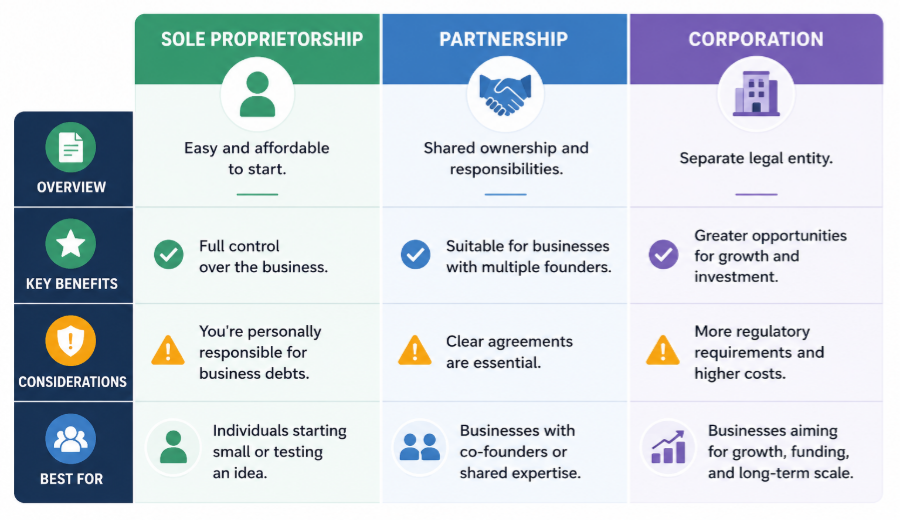 Many entrepreneurs also prefer to register a business in BC due to the flexibility and protection provided, especially when they are planning to grow the business.
When deciding between provincial incorporation Canada and federal incorporation Canada, think about where you plan to do business—not just today, but several years from now. Moreover, selecting an appropriate structure now saves you time, money, and unwarranted changes in the future.
3. Register Your Business the Right Way from the Start
Once you’ve decided on your business structure, it’s time to make it official.
To register a business in BC isn’t simply about meeting legal requirements. It also demonstrates to customers, lenders and partners that you are serious about what you are doing.
To register a business in BC, the process may include:
- Registering or incorporating your business.
- Completing the required government filings.
- Receiving your official business documents.
If you’re pursuing federal incorporation Canada, you’ll usually need a NUANS report to verify that your proposed business name isn’t too similar to an existing one.
While it’s possible to complete the process yourself, many entrepreneurs choose professional registration services to save time and avoid filing mistakes.
After all, starting your business with accurate documentation is much easier than correcting errors later.
4. Set Up the Legal and Financial Essentials with Confidence

When your company is officially registered, it is time to have systems in place that make everything run smoothly. Once you register a business in BC, setting up proper financial systems, records, and compliance processes can help keep your company organized from the beginning.
Before you launch, make sure you’ve:
- Register GST/HST if your business needs it
- Applied for any necessary licenses and permits
- Opened a dedicated business bank account
- Created a bookkeeping system to track income and expenses
These are not the most exciting activities when it comes to beginning business, yet they are some of the most essential ones.
Good financial habits ease you through tax season, manage cash flows better, and enable you to make better-informed business decisions at the outset.
Imagine these systems as the engine to keep your business moving forward, not only today, but also as your business expands.
5. Build a Brand That Inspires Trust and Credibility
Individuals do not simply purchase products or services, but rather purchase those of the businesses they trust.
That is why branding deserves your attention from the very beginning. Even in a competitive market in BC, a consistent and professional brand image can assist you in standing out.
However, your brand isn’t limited to a logo. It includes every interaction customers have with your business.
Focus on the essentials:
- Create a professional website
- Use a business email instead of a personal one
- Keep your messaging consistent across every platform
- Deliver great customer service every time
Think about your own buying habits.
Would you trust a business with an outdated website and incomplete contact information? Probably not.
Small details create lasting first impressions. When your branding looks professional, customers are more likely to see your business as reliable and established.
6. Protect Your Business as It Grows

Risks are encountered in every business.
The good news? Most of them are controllable before they lead to costly issues.
As your customer base grows and operations expand, it’s important to put safeguards in place.
Think about securing your business by:
- Using written contracts for clients and suppliers
- Keeping corporate records organized
- Checking your legal and compliance obligations
- Backing up important business documents securely
Did You Know? Unexpected legal conflicts, loss of data, or even contract problems can threaten even small businesses. Early preparation for such situations can save time and money.
If you’ve chosen to register a business in BC, maintaining accurate corporate records is just as important as completing the incorporation itself. Being organized enables you to comply with continued compliance provisions and keep your business in good standing.
7. Keep Strengthening Your Foundation for Long-Term Success
Launching your business is only the beginning.
The strongest businesses continue improving long after opening day.
Markets change. Customer expectations evolve. New opportunities appear. Businesses that regularly review their goals and adapt are often the ones that continue growing.
Here are a few habits worth developing:
- Monitor your cash flow and financial performance
- Stay informed about industry trends
- Invest in learning and improving your skills
- Update your business plan as your company grows
Once you find that your business finally grows outside British Columbia, then you may find that federal incorporation Canada is more aligned with your long-term vision as compared to provincial incorporation Canada. The transitions become a lot easier with planning ahead.
Similarly, in the case of new products, services, or locations, it is always a good idea to review your legal requirements and business records to keep your business running without any trouble.
A strong foundation isn’t something you build once.
It’s something you continue strengthening every step of the way.
Whether you are launching a small local company or planning a larger venture, taking time to register a business in BC correctly can create a reliable foundation for long-term success.
Conclusion
A good business foundation is not created with a single decision but a sequence of well-considered decisions. Spending time to plan your business, select the appropriate structure, fulfill legal standards, plan your finances, and secure what you are creating can make a difference.
Although each and every entrepreneur has a different path, the right foundation will give you the assurance to overcome the odds and take up new opportunities as they present themselves.
If you’re ready to take the next step, working with experienced professionals can make the process simpler, allowing you to focus on growing your business instead of worrying about paperwork.
FAQS
1. How can I tell if my business is built on a strong foundation?
A strong business base entails a clear business plan, the appropriate legal form, the right registration, well-structured finances, adherence to regulations and a future expansion strategy.
2. What’s the biggest mistake new business owners make when starting in BC?
Most entrepreneurs are in a hurry to start a business without planning, selecting the appropriate business structure, or following the necessary registrations, which would create problems in the future, both legal and financial.
3. Is it better to register a business in BC before starting to sell products or services?
Yes. It is better to register a business in BC before you begin operating helps ensure you’re meeting legal requirements, builds credibility, and allows you to start on the right footing.
4. How often should I review my business plan after launching?
It’s a good idea to review your business plan at least once a year or whenever your goals, market conditions, or business operations change significantly.