Crypto margin platforms can differ significantly in the products they offer, so leverage alone is not enough to compare them. Spot margin, crypto-backed borrowing, and leveraged futures use different fee structures, financing models, margin requirements, and liquidation mechanisms.
For this comparison, we focus first on the type of leverage each platform provides and then evaluate the metrics that are actually comparable within each category: maximum leverage, trading fees, borrowing or funding costs, margin modes, liquidation rules, and position-management tools.
This distinction matters because a 10x spot-margin position is not directly comparable with a 100x or 500x futures position. Higher leverage also does not necessarily mean lower trading costs or a better margin experience.
Best Crypto Margin Trading Platforms Compared
|
Platform |
What sets it apart |
Max leverage |
Base trading cost |
|
CoinRabbit |
Super-simple margin trading with crypto loans and capital management tools in one place |
Up to 10x |
0.02% |
|
Binance |
Broad crypto ecosystem with deep liquidity and margin integrated into a full-scale exchange |
Up to 10x isolated / 5x cross |
0.10% at VIP 0 |
|
Bybit |
Trading-focused experience with tools for actively managing leveraged positions |
Up to 10x on selected pairs |
0.10% maker / 0.10% taker for non-VIP users |
|
OKX |
Advanced trading and portfolio tools with flexible margin functionality |
Up to 10x on selected markets |
0.08% maker / 0.10% taker at standard tier |
|
MEXC |
Access to very high leverage across a broad range of derivatives markets |
Up to 500x on selected contracts |
Varies by contract and account tier |
Platforms calculate risks differently. Maximum leverage, fees, borrowing rates, and product availability can vary by asset, position size, account tier, and jurisdiction.
CoinRabbit — Best for Capital Management with Simple Margin Trading
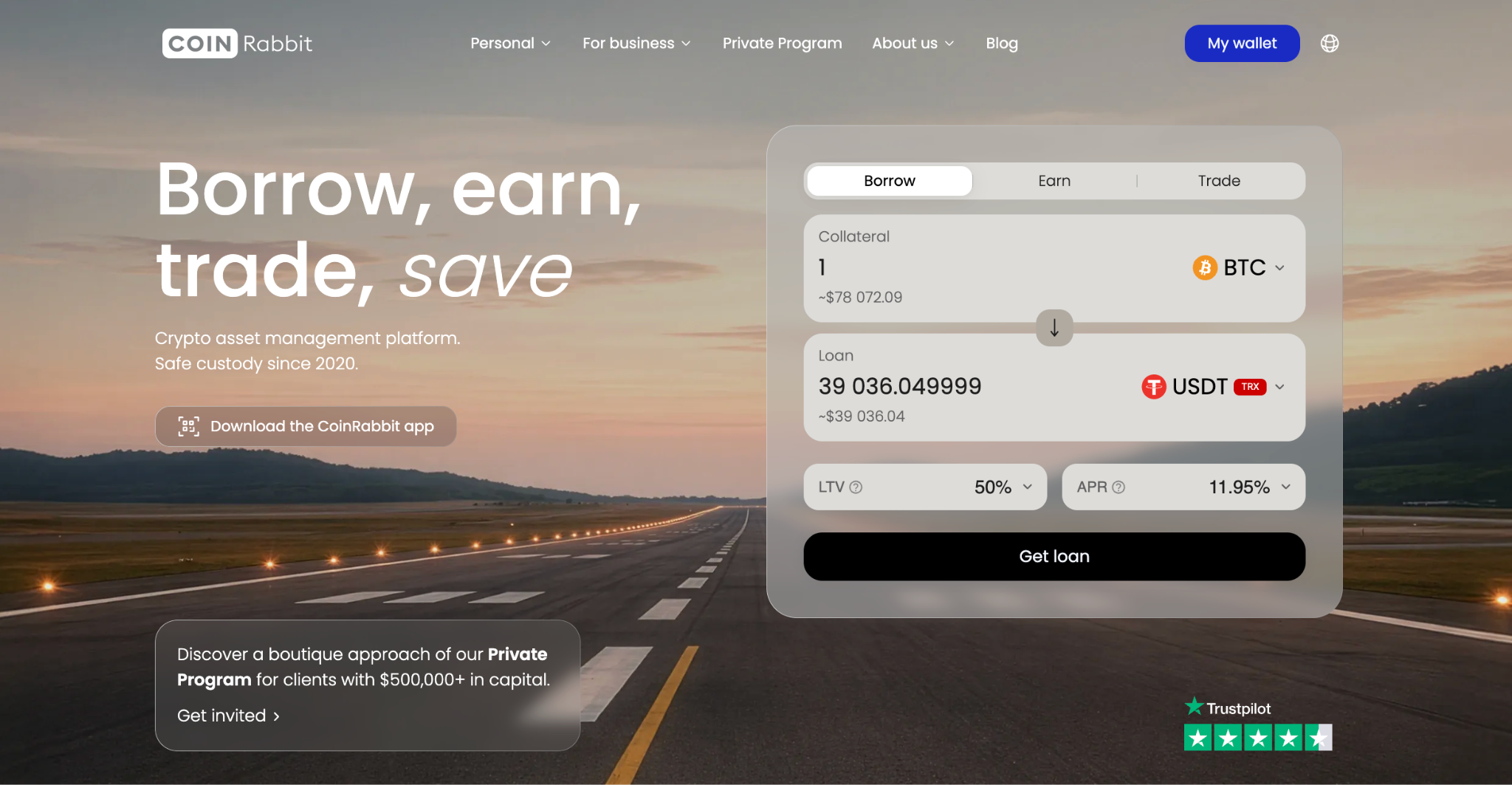
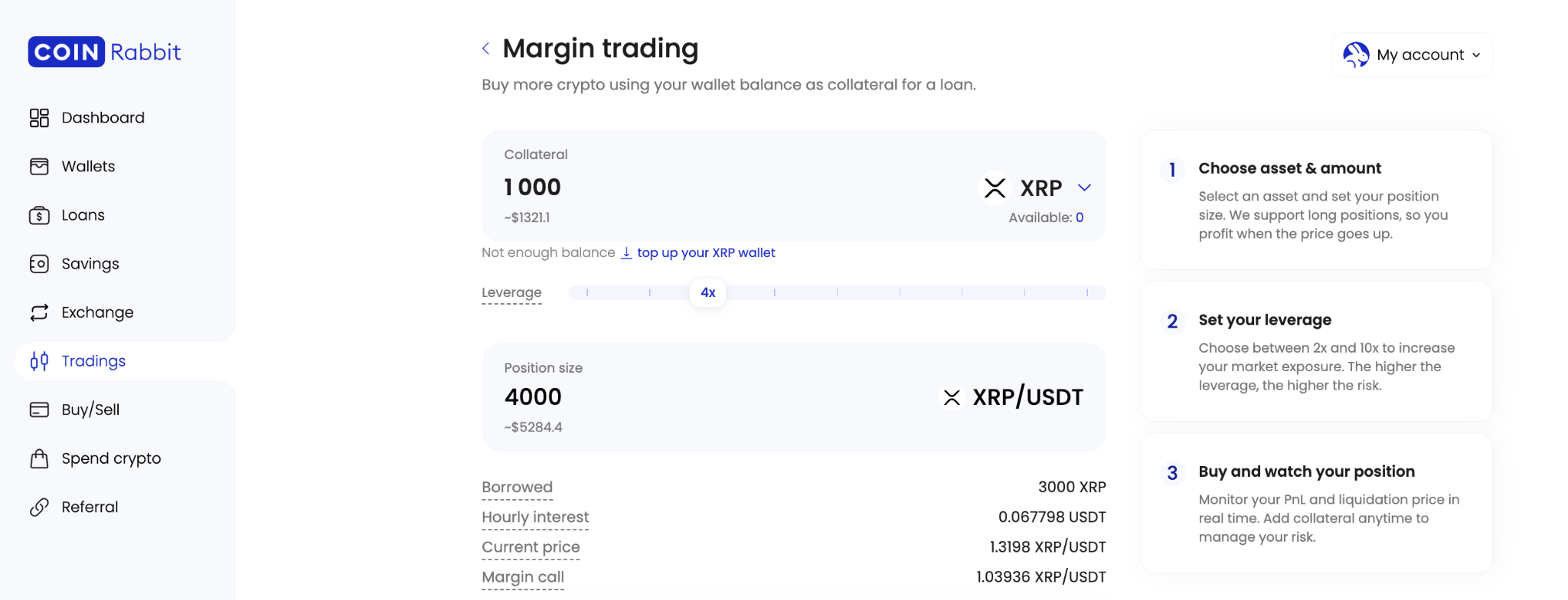
CoinRabbit offers crypto margin trading with leverage of up to 10x. Before opening a position, users can see two important numbers: the cost of the trade and its liquidation level. A 0.02% fee applies to each position, while borrowing is charged at a 15% annual rate, with financing accruing hourly from the start of the position.
The pricing is designed around a simple what-you-see-is-what-you-get approach: users can see the relevant cost and liquidation level before opening a position, without having to work through a complex fee structure or trading setup.
What makes CoinRabbit different is that margin trading sits within a broader capital-preservation ecosystem, rather than operating as a standalone trading product. It brings together multiple ways to manage crypto capital, including a crypto wallet, exchange, and savings products, while also serving as a best crypto lending platform for users looking to borrow against their assets. To use margin trading, you need to register for a CoinRabbit account. Once registered, the available products can be accessed from the user dashboard.
When a position is open, CoinRabbit shows it in both the Trading section and the main Dashboard. The platform also sends alerts as the position approaches liquidation. CoinRabbit then credits the resulting funds directly to the user's internal wallet, where they can be securely stored, borrowed against, or spent without a separate withdrawal from the trading product.
At first glance, the leverage isn't the highest available in crypto trading. CoinRabbit's 10x maximum matches the headline leverage available on Bybit and selected OKX markets, as well as eligible Binance isolated-margin pairs. The difference is what CoinRabbit puts around that leverage. The trade workflow stays relatively short: check the cost and liquidation level, open the position, monitor it, close it, and get the resulting funds back.
Best for: Users who want up to 10x margin trading as part of a broader crypto capital-preservation ecosystem, with transparent costs and separate crypto-loan options.
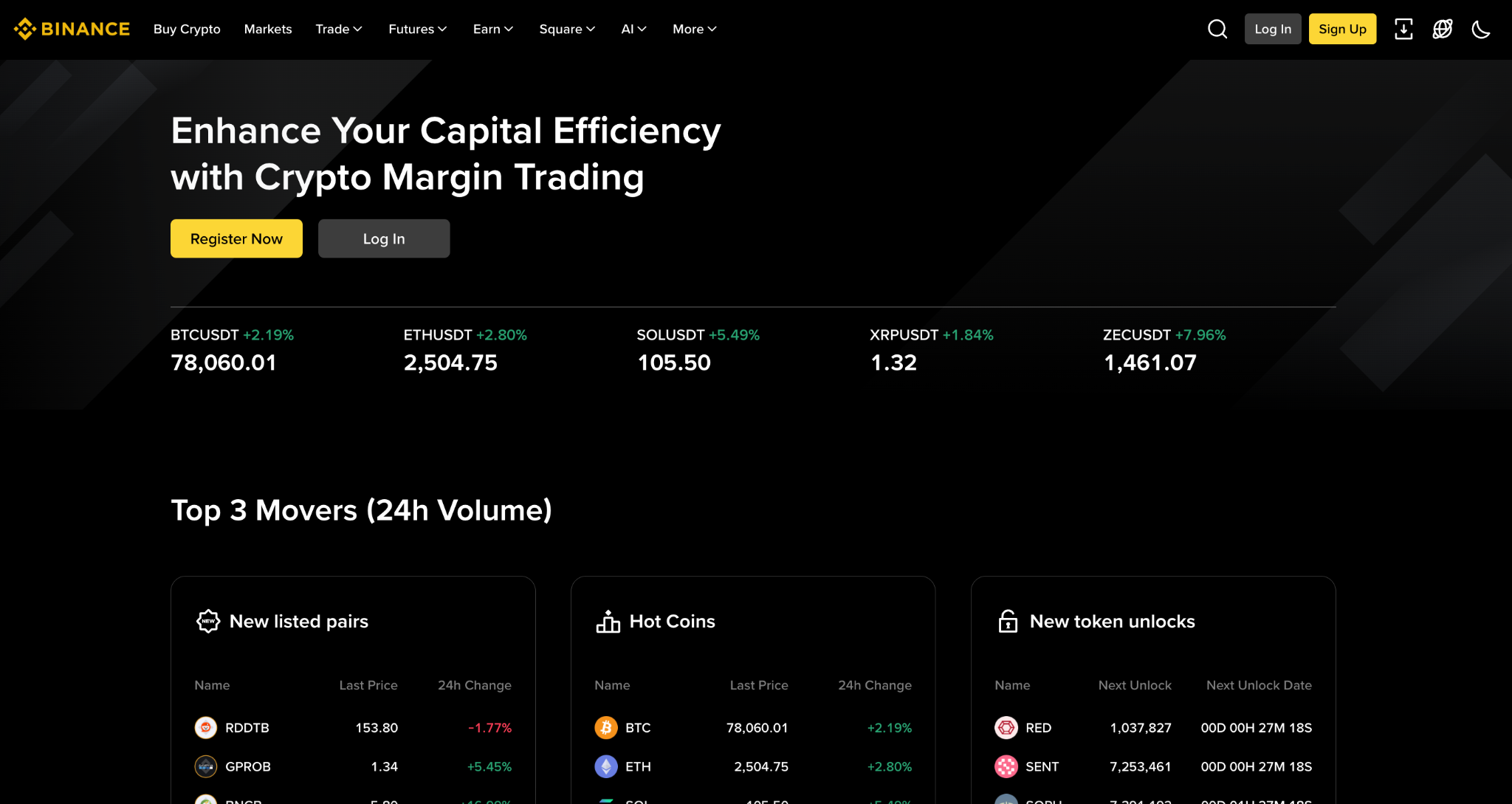
Binance — Best for a Full-Scale Exchange with Multiple Margin Modes
Binance combines margin trading with a full-scale crypto exchange and deep liquidity. Its margin products give traders multiple configuration options, including different margin modes and collateral settings.
Binance supports up to 10x leverage on eligible isolated-margin pairs, while Cross Margin supports up to 5x. Isolated-margin leverage is tiered, so the maximum available leverage can decrease as the borrowed amount increases.
For a regular VIP 0 user, Binance's standard spot trading fee is 0.10%. Higher VIP levels can reduce the fee, and eligible users can also receive a discount when paying fees with BNB.
Borrowing introduces an additional variable cost. Binance uses dynamic interest rates that can change hourly according to market conditions. The first interest charge is prorated from the time of borrowing until the next hourly settlement, after which interest is charged at each full-hour settlement until the loan is repaid.
For eligible isolated-margin pairs, Binance also uses defined margin-call and liquidation thresholds that vary by leverage tier, giving traders specific risk levels to monitor.
Best for: Traders who want a full-scale exchange with multiple margin modes, deep liquidity, and more configuration options.
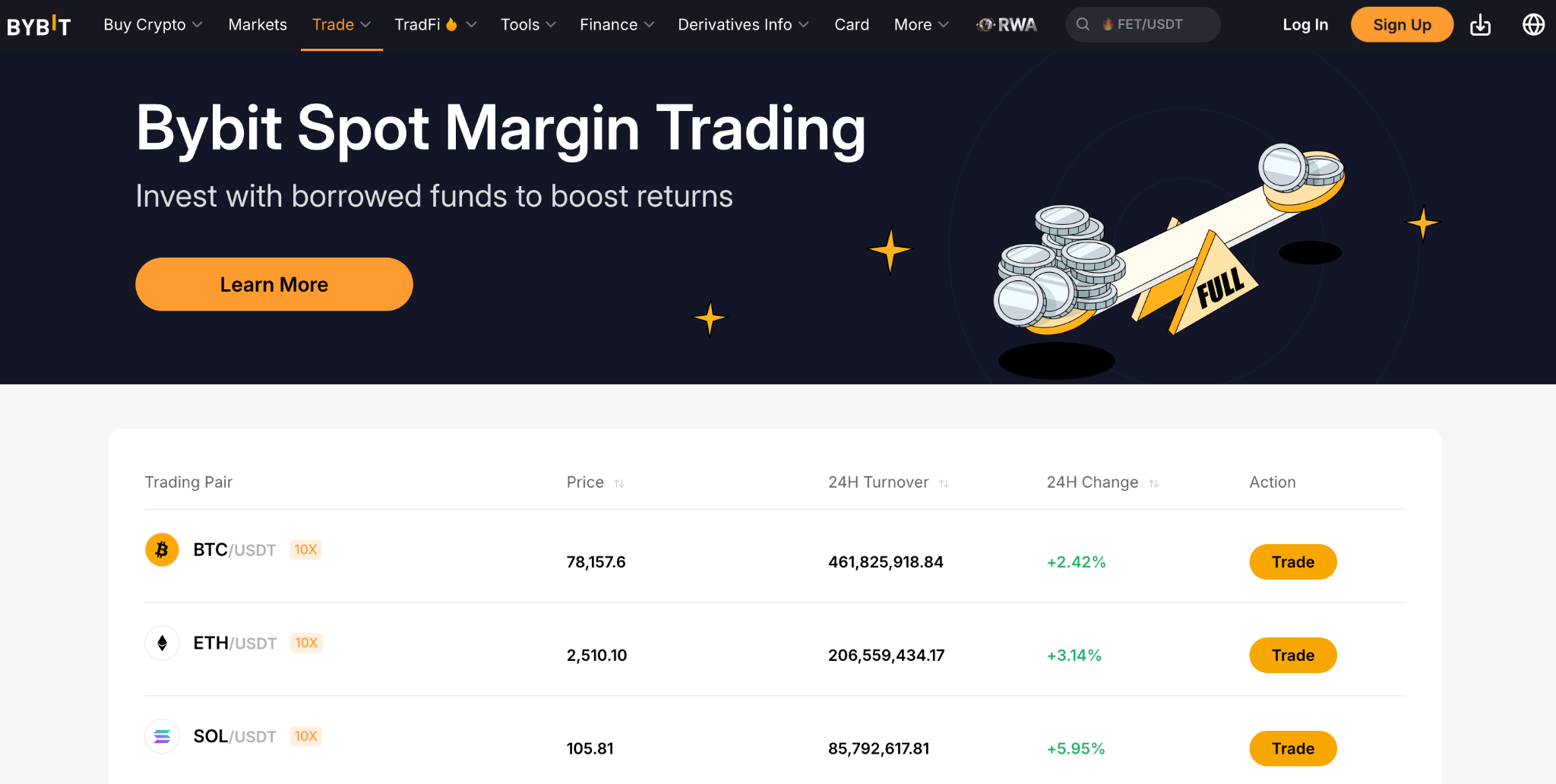
Bybit — Best for Active Margin Management
Bybit is focused heavily on trading and provides tools for users who actively manage leveraged positions. Its Spot Margin product supports up to 10x leverage on selected pairs, although individual assets can have lower limits.
Bybit currently offers Spot Margin through Cross Margin and Portfolio Margin rather than a separate Isolated Margin mode. This gives traders different ways to manage collateral depending on their account setup.
Non-VIP users pay 0.10% maker and 0.10% taker fees for spot trading. Borrowing interest accrues hourly and is calculated based on the amount borrowed and the applicable daily interest rate.
Users can borrow manually or use automatic borrowing when a margin order requires more funds than are available in the wallet. Bybit states that liquidation can be triggered when the account's Maintenance Margin Rate reaches or exceeds 100%.
One detail worth knowing is that an unfilled margin limit order can trigger borrowing if the available wallet balance is insufficient. Cancelling the order returns the borrowed amount, but any interest that has already accrued remains payable.
Best for: Active margin traders who want flexible borrowing and the option to manage loans manually or automatically.
OKX — Best for Advanced Trading with Flexible Margin Functionality
OKX combines margin trading with a broader set of trading and portfolio tools. Its selected spot-margin markets support up to 10x leverage, with users able to choose between isolated and cross margin where available.
At the standard spot tier, OKX currently charges 0.08% for maker orders and 0.10% for taker orders. Lower fees are available through its VIP structure.
The borrowing ceiling is determined by several factors, including the user's borrowing limit, the asset's tiered position limit, and available liquidity in the lending pool.
Borrowing costs are calculated hourly on the outstanding liability. Under OKX's current EEA rules, the liability is checked at the top of the hour. For example, if a user borrows at 22:55 and fully repays at 22:57, no borrowing cost is charged at 23:00.
Best for: Traders who want flexible margin modes combined with advanced trading and portfolio-management tools.

MEXC — Best for Very High Leverage and Derivatives Markets
MEXC stands apart because its headline leverage comes primarily from futures rather than spot margin. Selected contracts can currently offer leverage as high as 500x, although the available leverage depends on the contract and position size.
MEXC uses tiered risk limits, meaning the maximum leverage can decrease as the position becomes larger. Some contracts may offer very high leverage at smaller position sizes before moving to lower leverage tiers.
Trading costs also vary by contract and account tier, so there is no single base fee that applies across the futures market.
For traders using high leverage, the position-specific risk limits are particularly important. As position size increases, the required margin can rise and the maximum available leverage can fall.
Best for: Experienced traders who specifically want very high leverage and a futures-focused trading environment.
Which Crypto Margin Trading Platform Is Right for You?
The platforms offer different approaches to leveraged trading, from simple margin workflows to highly configurable exchange and derivatives environments.
CoinRabbit focuses on simple margin trading within a broader crypto capital-preservation ecosystem. Binance combines margin with a full-scale exchange and multiple margin modes. Bybit focuses on active margin management and manual or automatic borrowing. OKX offers more advanced margin and account configuration options, while MEXC provides very high leverage through selected futures contracts.
When comparing platforms, the key factors include maximum leverage, trading fees, borrowing costs, margin modes, liquidation mechanics, and the range of products available. These factors can vary by asset, account tier, position size, and market conditions.