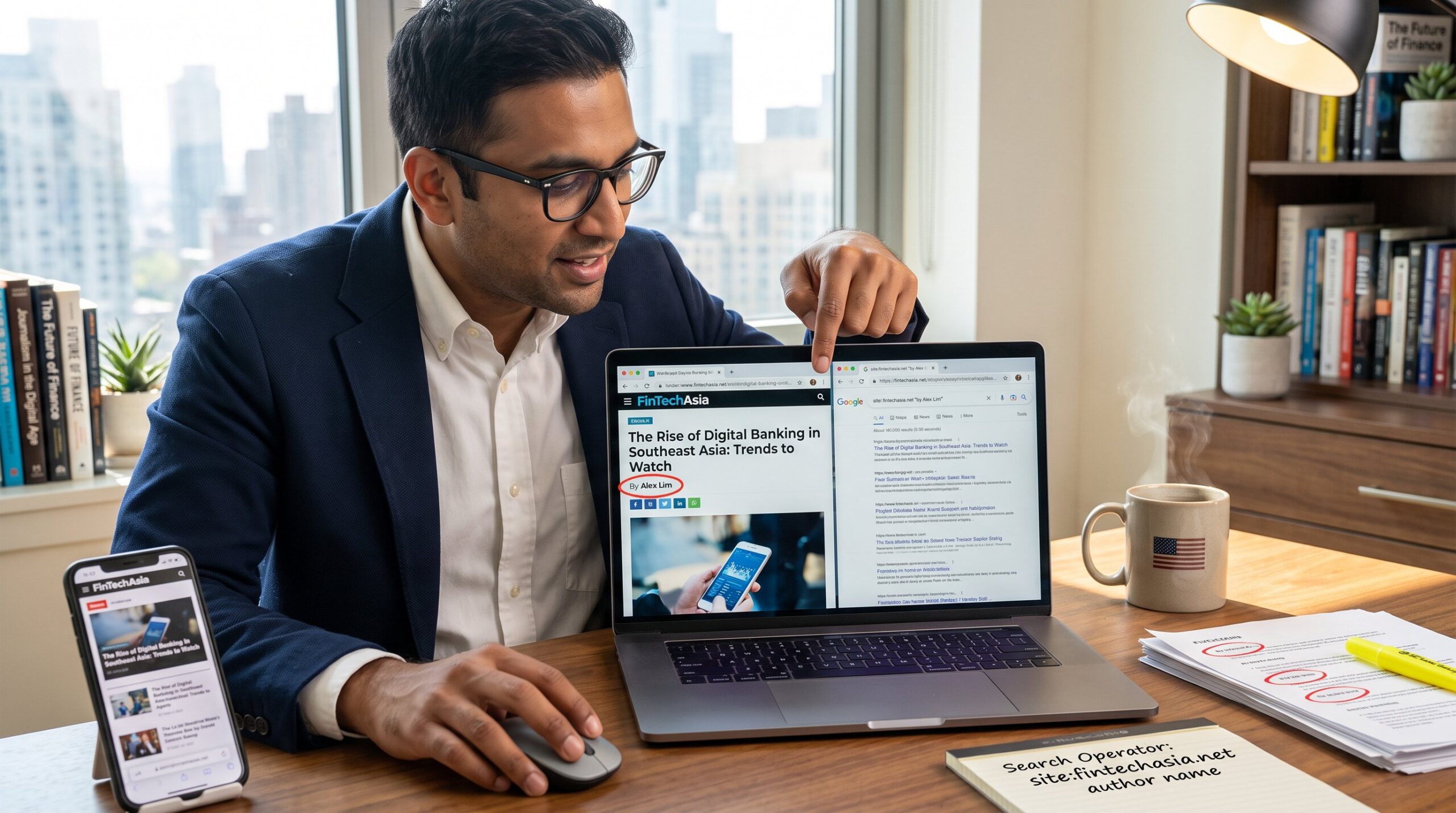
Where to Find FinTechAsia Contributor Pages starts with one simple move: open any FinTechAsia article and click the byline. This guide explains why author links work, where author archives live on fintechasia.net, and fast techniques for locating a contributor when the site lacks a public author index. It assumes readers want direct, repeatable steps to find profiles, article lists, and bios tied to author bylines on FinTechAsia.
Key Takeaways
- Clicking the byline on any FinTechAsia article is the fastest way to access a contributor page with their posts and metadata.
- FinTechAsia contributor pages follow a predictable WordPress pattern: https://fintechasia.net/author/username/, where the username comes from the article byline.
- If an author’s byline isn’t clickable, use the site’s search or Google operators like ‘site:fintechasia.net “Contributor Name”‘ to find their articles and contributor page.
- Contributor pages list all articles by the author across categories and often include category labels, publish dates, and sometimes a short bio or profile photo.
- Since FinTechAsia lacks a central author index or editorial directory, robust searching and byline clicks are essential for locating contributor profiles effectively.
Quick Answer: Fast Links To Contributor Pages
Fact: The quickest way to reach a FinTechAsia contributor page is by clicking the author name on any article byline. On fintechasia.net, article bylines usually link to a WordPress-style author archive such as /author/username/. That archive lists that contributor’s posts and basic metadata.
Why this works: FinTechAsia uses a standard WordPress template that ties each post to an author object. The byline is the most reliable anchor because usernames vary: guessing URLs without the byline risks dead links. If an article lacks a clickable byline, the next fast step is a site search for the author name.
Practical tip: When a contributor’s byline appears but does not link, copy the displayed username and try this pattern: https://fintechasia.net/author/username/ (replace username). If that fails, use the site search or Google operators described below.
Where Contributor Pages Live On FinTechAsia
Fact: Contributor pages live as author archives attached to posts across FinTechAsia categories like Latest, Start Me Up, and Crypto Facto.
FinTechAsia groups coverage across many verticals: a contributor who writes on payments and crypto will have all their posts listed in one author archive regardless of category. This means a single profile can surface articles from Finance, Trading Days, and Crypto Facto.
Concrete example: a writer who published three pieces in Start Me Up and two in Crypto Facto will see five posts under their author archive, each with category labels and dates.
Contextual resource: for a broader orientation to the site and its topic structure, readers can consult a short guide to FinTechAsia’s coverage in this site overview.
Common URL Patterns For FinTechAsia Contributor Profiles
Fact: Author pages use predictable WordPress paths.
Pattern: Most contributor pages follow https://fintechasia.net/author/username/. The username comes from the byline. If an article shows “Jane Doe” but the byline link uses “jdoe,” the archive will typically be /author/jdoe/.
Verification step: open any article, hover the byline, and inspect the link target. That shows the exact username to use when typing URLs manually.
Using The Sitemap And Author Index To Locate Contributors
Fact: The public sitemap lists posts and categories but not a dedicated author index.
How to use it: locate one of the contributor’s articles via the sitemap, open the article, then follow the byline to the author page. The site does not expose a single page that lists every author, so this two-step approach is the reliable fallback.
Related reading: for an entry point into FinTechAsia’s core coverage and pillar content, consult this site primer.
Finding Contributors With Site Search And Google Operators
Fact: Site search and Google operators help when bylines are absent or ambiguous.
On-site search: Use the search box on fintechasia.net with the contributor’s full name, a likely username, or a topic they write about. On-site search returns posts: open one and click the byline to access the author archive.
Google operators: If on-site search fails, use targeted queries such as:
- Contributor Name fintechasia.net
- site:fintechasia.net “Contributor Name”
- site:fintechasia.net “by Contributor”
Example: searching site:fintechasia.net “by Alex Lim” often returns Alex Lim’s articles. Once an article appears, the byline or the /author/username/ pattern leads to the full archive.
Comparative note: larger publishers sometimes expose editorial directories. For perspective on how other sites organize contributor listings, see this external author overview, which shows a centralized contributor area. FinTechAsia currently relies on per-article bylines instead.
Concrete troubleshooting: if Google finds multiple similar names, add a topic keyword, e.g., site:fintechasia.net “Alex Lim” crypto, to narrow results. If results still mix bylines, open articles and confirm the byline link target.
What You’ll Find On A FinTechAsia Contributor Page
Fact: A contributor page primarily lists articles by that author and shows basic metadata: bios vary by template.
Typical contents:
- Chronological list of posts with titles, categories, and post dates.
- Category labels such as Start Me Up, Latest, or Crypto Facto next to each entry.
- Occasional short bio or profile photo when the author filled out their WordPress profile.
Concrete detail: an author archive might display 12 posts with the newest at the top: each entry shows the category tag and the publish date. If an author added a short bio, it usually appears at the top of the archive with a photo and social handles.
Why this matters: journalists, PR pros, and researchers use author archives to assess a contributor’s beat and track record. For instance, someone preparing outreach can quickly count past fintech pieces and pick the most recent or relevant article to reference.
Site-internal crosslinks: when exploring contributor pages, readers may want to follow coverage themes. FinTechAsia publishes topical hubs and updates that complement author pages. For fintech startup coverage, see this start hub. For 2026 business trend reporting, consult this trends report.
Conclusion
Insight: FinTechAsia contributor pages are reachable, predictable, and best accessed through article bylines or targeted search. Because the site lacks a central author index, clicking bylines, using site search, or applying Google operators yields the fastest results. Readers who map a contributor’s articles will better judge expertise, topics covered, and recency. For a broader orientation to the site’s themes before diving into author pages, the pillar overview is a helpful starting point.