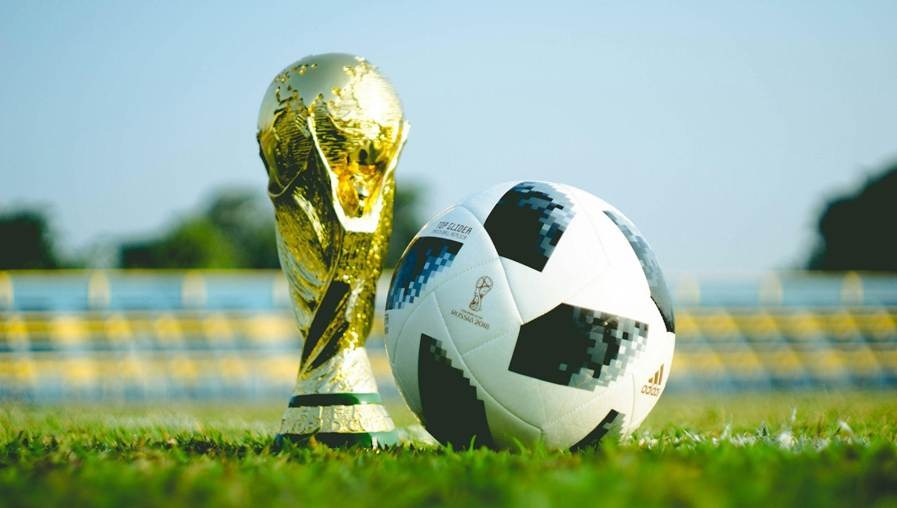
Statistically, the FIFA Men’s World Cup is the most important sports event in the world. It’s a global competition that unites interest and love for the beautiful game. It’s a testament to the passion that unites people of all backgrounds, ages, and nationalities.
Naturally, not every country in the world has association football as its primary sport. Some consider it secondary, tertiary, or just find it niche. However, there is interest all across the world. It’s a phenomenon that brings an immense level of interest.
It also helps that some of the most memorable moments in the interest of football are signatures of the World Cup. The Hand of God and Goal of the Century, Brazil’s meltdowns on home turf (7-1 and the Maracanazo), Ronaldo Nazario’s 2002 redemption, England’s victory on British soil, and many, many, many more.
We tune into every World Cup with excitement and the indomitable hope that we’ll see a memorable competition. In some cases, the players and teams bless us with legendary moments that we carry with us throughout our lives. It’s always something that rises through the lore of an edition, turning into a cherished memory.
The 2026 World Cup, hosted by the North American trio of the USA, Canada, and Mexico, is the first edition hosted there since 1994, when Brazil won its fourth title. Mexico, a two-time host, housed the World Cup in 1970, Pele’s last dance for Brazil, and 1986, Maradona’s legendary peak.
This edition also comes with interesting changes in formats. Namely, it expanded upon the model, bringing more nations along in a global competition of fraternity through football. This article will analyse what’s new, nearly half a year before kick-off.
How we got to this new format, and what it means for world association football
Up until the 2026 version, the Men’s FIFA World Cup eventually got to 32 teams. These nations came from all the world’s football conferences, distributed based on various criteria that made up an intricate formula. Quite notably, it’s the first expansion since 1998
This World Cup brought about changes in format. Now, we have an event with 48 teams. This increases the number of games from 64 to a total of 104. It will also entail an extra week of playing, totaling 39 days. For reference, the 2022 edition lasted for 32 days.
We’ve gotten to this point after a process that started way before the actual decision that validated the expansion. Talk of World Cup expansion has been going on for at least a decade, including as a reference point by the current FIFA president, Gianni Infantino.
Deliberation, backroom politics, and other considerations that need not be mentioned have taken part in the decision-making process. Ultimately, the FIFA Council voted in this move on the 14th of March, 2023, at the 73rd FIFA Congress, hosted by Rwanda’s capital city, Kigali. Quite notably, the vote was unanimous.
This decision is particularly important in terms of its message. The powers that be want more football since the event happens every 4 years, not yearly. More teams would have the opportunity to qualify, and more matches would attract viewers and attendees.
Even sports betting, one of the most important industries that has attached itself to the game, will have more games in its offering. As a betbrain prediction today showcases, there are fluctuating odds even now, with bookmakers ramping up their parlay structures as preparation for a World Cup with almost 40 more match-ups.
The draw: 4 Pots
One of the biggest points of criticism launched toward FIFA that does not involve politics and money is the complexity of its process. Transparency in a global sport is key, but so is simplification. The current system is confusing, but it’s not rocket science.
The main idea of the current drawing system is to provide parity across groups rather than creating bottlenecks. Every edition has its so-called ‘group of death,’ which typically generates intense matches starting with the early stage.
FIFA probably wants its main draws to be in the knockout stage, when the titans start colliding and creating memorable events. You also have the occasional underdog darling, like 2022’s Morocco, 2014’s Costa Rica, and so plenty of other examples.
There will be 4 pots of 12 nations. The first one, as you might expect, is the valorical collection of the best teams from each conference. Well, not entirely. The three host nations are there as well.
The other ones are the best-ranked nations based on the November 2025 World Rankings. This means that we have Spain, Argentina, France, England, Brazil, Portugal, the Netherlands, Belgium, and Germany. Croatia narrowly missed the mark, placing in 10th.
The other pots contain teams based on their ranking order. Values decrease from pot 2 to pot 4. When writing this, 42 of the 48 teams have qualified, with 6 others yet to try their hand.
UEFA, the European confederation, is about to have 8 match-ups. Of these teams, 12 have placed in 2nd during the qualification round, while the others have clinched participation in this play-off round due to their Nations League placement. The final 8, which win their first match-ups, will play another final round, with the final 4 victors qualifying for the World Cup, going directly into pot 4.
The other two spots will be via interconfederation play-offs. Six teams compete here. Iraq and Congo will participate directly in the final round. Two match-ups, between New Caledonia and Jamaica, and between Bolivia and Suriname, will give them their competitors.
Groups and the knockout stage
One of the most novel things about the 2026 World Cup edition is that the knockout stage will include 3rd-placed teams as well. Done are the times when only the first-placed and second-placed teams will enter the final fray.
There are other considerations that build the group stage. The idea is not to have teams from the same confederation within the same group. The only exception is UEFA, which has the most representatives; they can have 2 teams per group at most.
Another key tweak, created in the interest of parity, is to separate the top-ranked teams. Two of the best 4 will be on one side of the final knockout bracket, while the other two will be on the other side. This would ‘protect’ the competition from precocious match-ups, as these top teams would only meet in the semifinals or final.
What we just said would work only if these high-ranked teams win their group. If they don’t, the pathway would see them meet much earlier than expected (or intended).
Speaking of in-group positioning, there will be a round of 32, which is a new introduction to the model. This means that, of the 32, we will have 12 group winners, 12 runner-ups, and the best-performing 8 teams that have finished 3rd in their group.
If you were wondering, the ranking is based on points and goal difference. There are 6 criteria for classification as a 3rd-placed team, but the two we’ve mentioned are the most important. After that, there will be business as usual within the bracket system that we know.
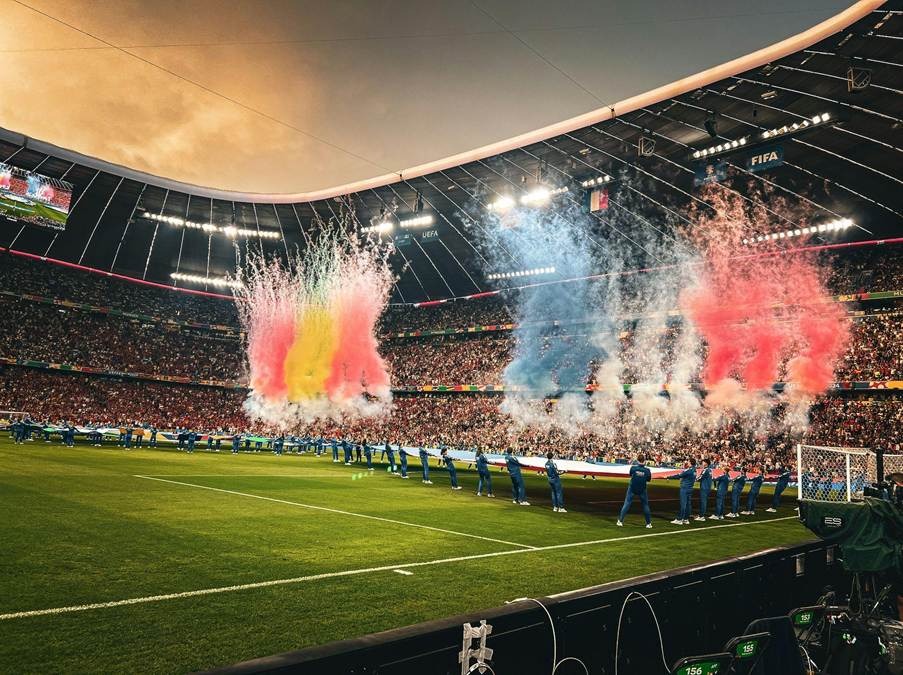
Will there be any further changes?
As you might’ve expected, there are no confirmed changes for 2030 and beyond, for now. However, there is a lot of buzz regarding the intentions and desires of the governing body, especially based on the patterns of operation that it has displayed.
There isn’t anything concrete regarding future editions. However, a Reuters report from 2025 mentioned that FIFA considers an expansion to a whopping 64 teams for 2030. The idea boils down to the special occasion of 2030, which is the centennial of the World Cup.
They’d like to make things special for the 100-year anniversary of the competition. Uruguay, the first host nation, will host a legacy match in the 2030 Cup, along with Argentina and Paraguay. The cross-continent, cross-federation, cross-sea trio of Spain, Portugal and Morocco will host the bulk of the edition.
Conclusion
That’s what you need to know most about the format of this World Cup edition. It’s a bit intense, to say the least, and the process was certainly interesting. Hopefully, the increased number of games will also generate numerous enticing moments.